
Inkbox
Inkbox is a direct-to-consumer brand offering semi-permanent, plant-based tattoos. Following rapid growth, the brand faced conversion friction online and application friction offline. I led cross-functional research and design initiatives to optimize the end-to-end customer journey from screen to skin.
Product Designer
Bridging Digital Browsing and Physical Application
Our initial customer journey mapping revealed critical friction points at both ends of the funnel:
Digital Friction
With thousands of designs available, users struggled with choice paralysis on mobile, hindering checkout conversion.
Physical Friction
Once the product arrived, misapplication of the physical tattoo led to poor results, driving up support tickets and damaging customer retention.
Establishing a research strategy
I established a dedicated research lab equipped with streaming capabilities. This allowed cross-functional teams to observe user friction firsthand, building deep empathy across the organization and remove friction on the user journey by:
improving design relevancy on the website,
reducing physical application errors,
and validating new product application technology.
Phase 1: Optimizing the Digital Discovery Funnel
I recruited target customers for in-person, mobile-first usability testing to observe how they navigated the vast design library.
70% of users
failed to find a relevant design from the homepage
80% of users
noted a lack of diver sity in the product photography.
100% of users
showed high intent toward the "Custom Tattoo" tool.
I led the redesign of the mobile browsing architecture, prioritizing personalized discovery and elevating the Custom Tattoo flow.

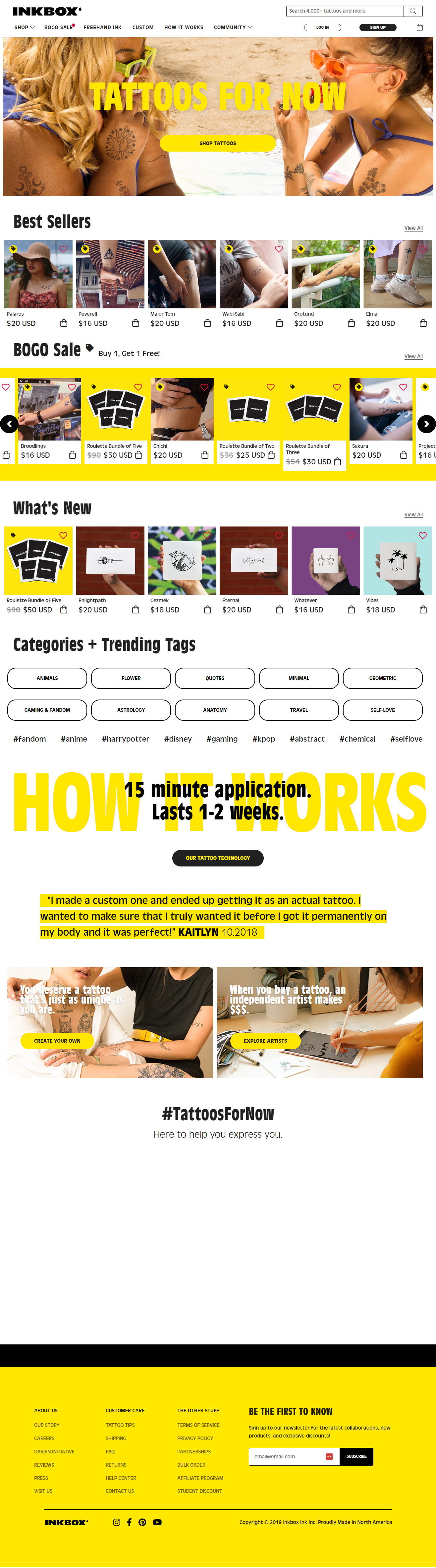
Relevant merchandising
We have implemented merchandising and searching tools that present products relevant to the customer, with better alignment of information architecture and nomenclature. We have also improved users’ understanding and expectations of the product with clearer content and graphics. Our focus on diversity and inclusion is reflected in our product and marketing photography.

Platform onboarding
Many users struggled to submit print-ready designs with the custom creation tool. To address this obstacle, we added a “tour” onboarding to help customers understand essential elements of the process.


Phase 2: Solving Physical Application Errors
Through unboxing observations and multi-day photo journaling, I validated the written instructions and complex packaging were overwhelming users.
30% error
rate during tattoo application or aftercare
90% explicit preference
for illustrative instruction preference over text or video.
I synthesized these findings to influence both the physical packaging design and the digital support ecosystem
Simplified the unboxing taxonomy
Customers focus on three elements when they apply their tattoo. I used this to improve the item names to match customer expectations and encourage desired actions. I coordinated with various stakeholders to help guide the marketing collateral like help videos and instruction designs.

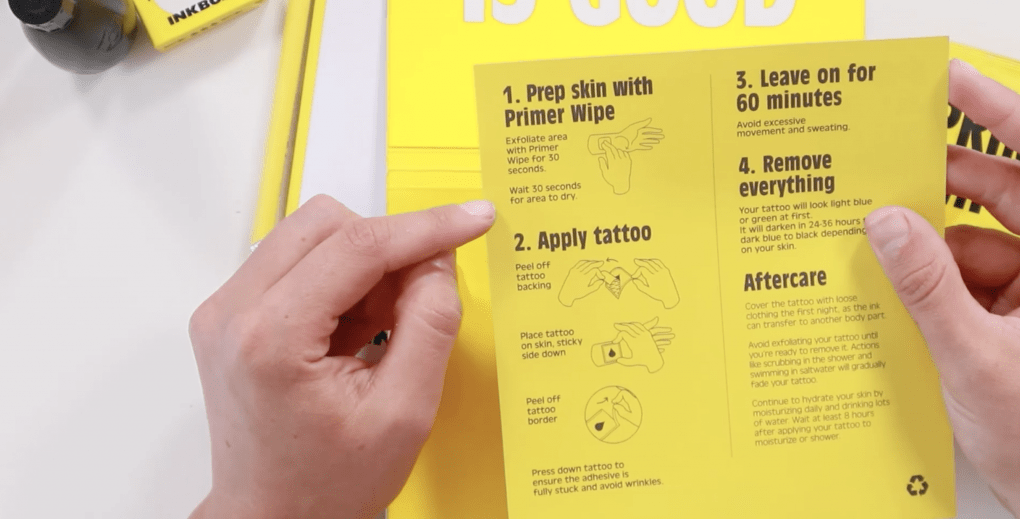
Pivoted to illustration-heavy instructions
With the new application process, materials, and streamlined instructions, we significantly reduced the number of items included in each package. This unique presentation made customers feel less intimidated by the application.

Outcomes
By connecting qualitative insights to business objectives, this initiative drove measurable success across multiple departments:
Digital Conversion
Improving the mobile architecture to surface relevant designs faster directly increased cart conversion. Furthermore, we optimized the custom design submission flow, improving the success rate from 50% to 95%.
Engineering Confidence
Production changes are inherently costly and risky. The research framework I established validated the new application technology, giving the industrial engineering team the data they needed to confidently overhaul the physical product materials.
Brand Alignment
The research insights directly influenced the successful rollout of the new brand identity, coordinating internal teams with external agencies.